295
295
Scanning the astronomical archive
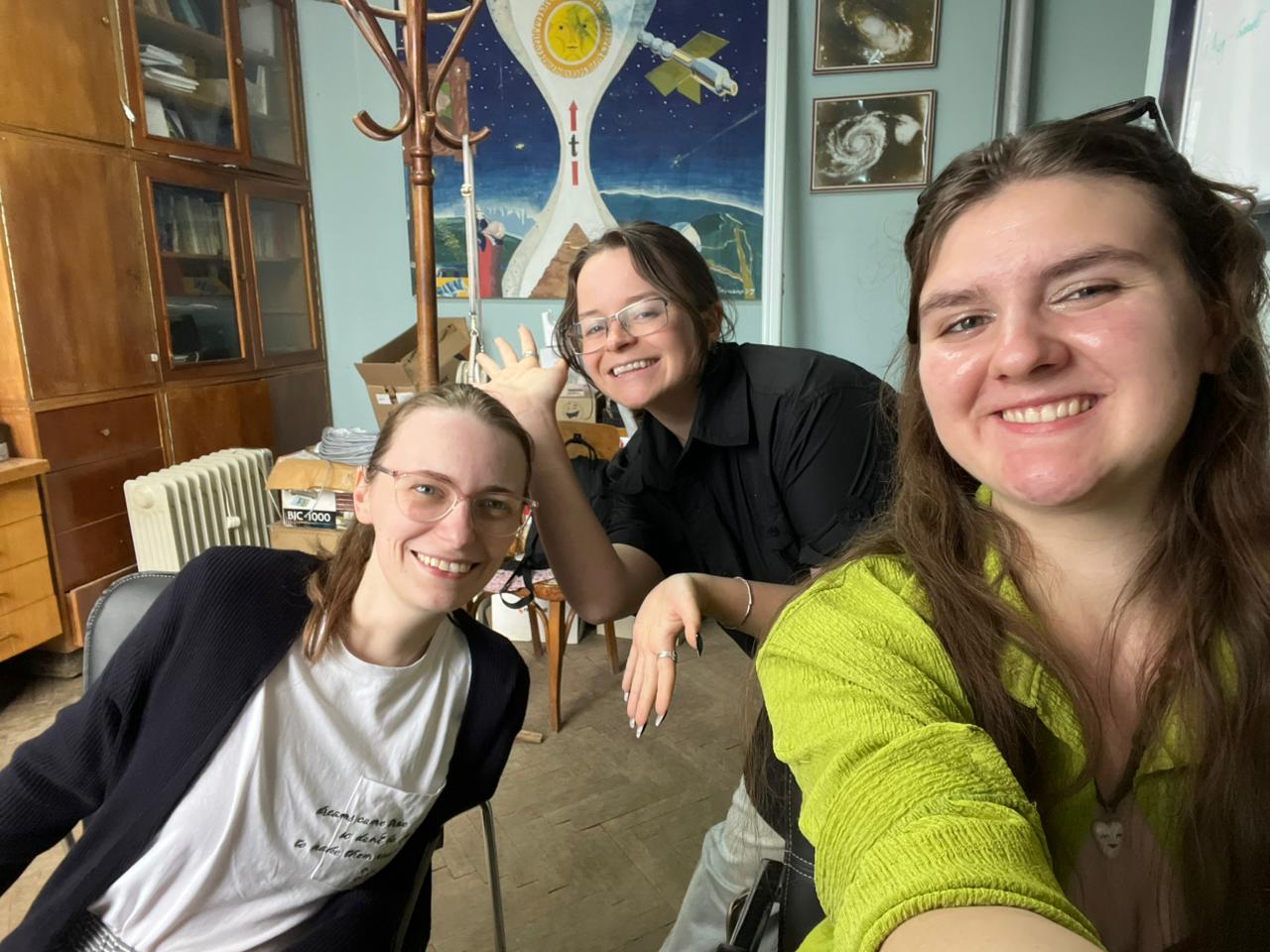
In June 2026, the Clear Skies Foundation (CSF) team first took part in an important mission – scanning the astronomical archive of photographic plates in Uzhhorod. It was a new experience for us, and we’re sharing the results with you! We aim to inspire anyone who is keen and cares to join the initiative, whilst also letting you know that we’d be delighted to help scan astronomical data anywhere else in Ukraine. Applying our knowledge, experience, and enthusiasm, we strive to ensure that the information held in our country’s archives is preserved, protected, and made available to researchers for further study and, of course, for future discoveries.
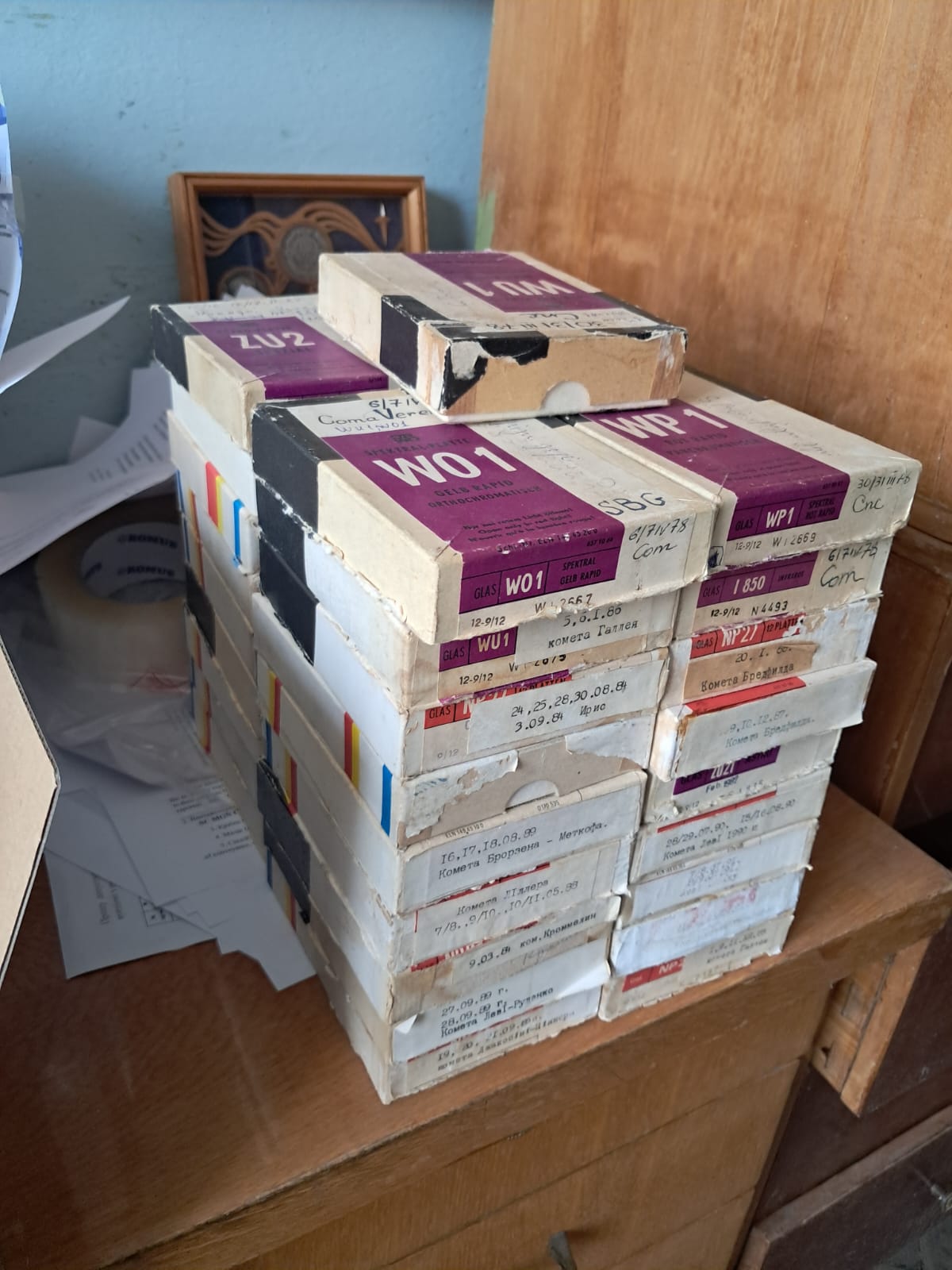
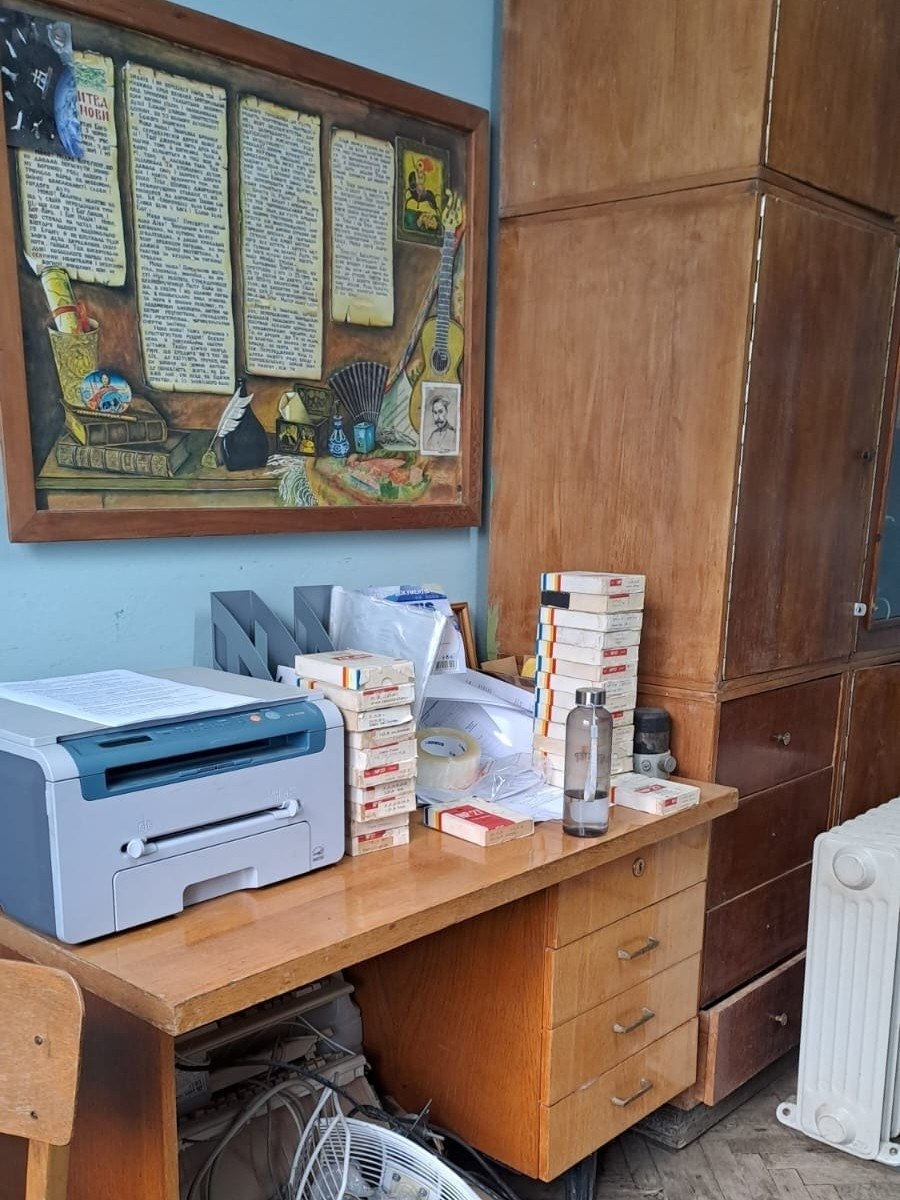
Between 17 and 29 June, two members of our team were based at the Educational and Scientific Laboratory of Space Research of Uzhhorod National University in Uzhhorod: Nataliia Vaskivska (CSF’s Analytical and Archival Units) organised the collaboration on behalf of the Clear Skies Foundation and took part in developing the methodology and carrying out the scanning; Bohdana Rusnak (CSF Unit of Communications) and Anastasiia Lukashuk (CSF Unit of Communications) scanned the archive; Viktor Kudak (Uzhhorod National University) coordinated the process, developed the scanning methodology and provided access to the archive.
SPECIFIC FEATURES OF THE ARCHIVE IN UZHHOROD
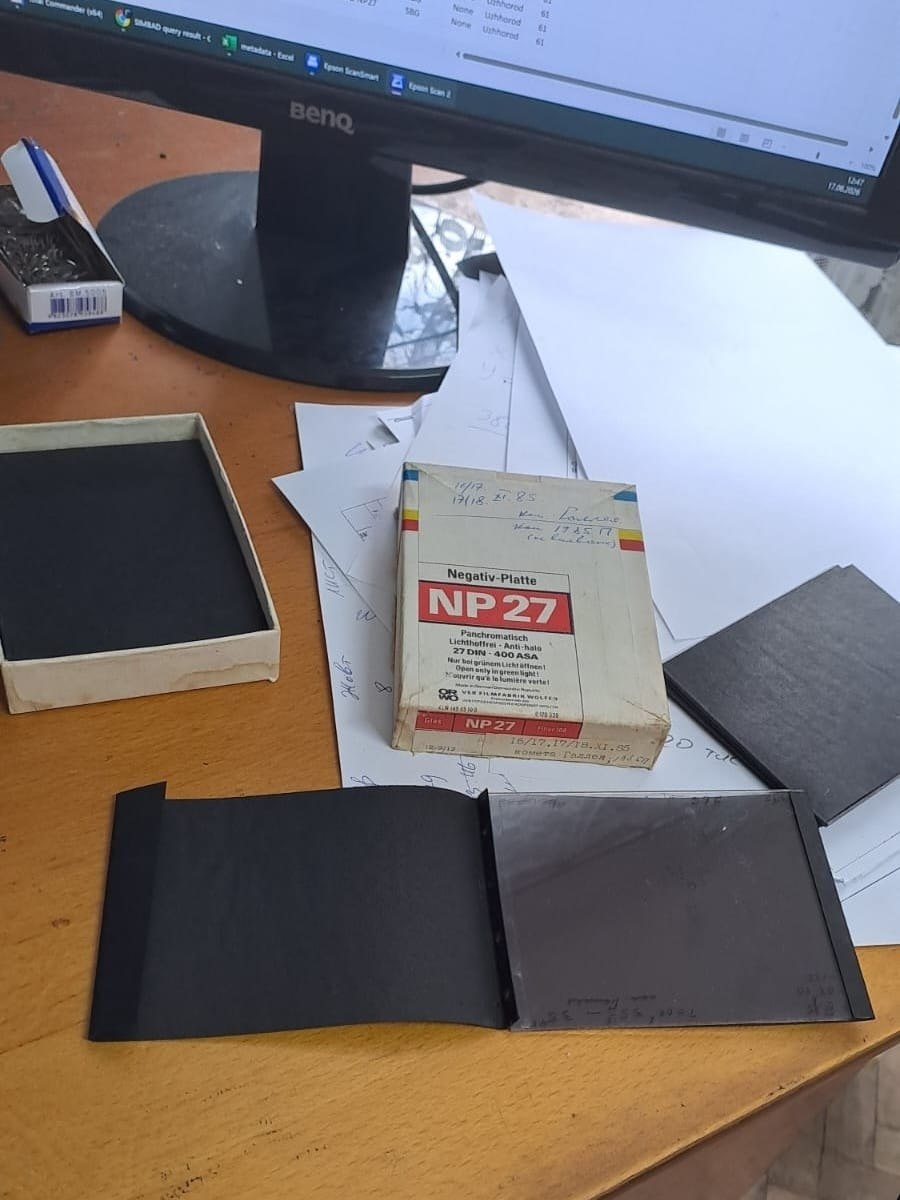
Astronomical archives are usually managed by institutions engaged in space research and responsible for compiling the data collected. The archive of the educational and scientific laboratory of Space Research at Uzhhorod National University holds photographic plates depicting comets, asteroids, and other celestial bodies, taken between 1970 and 1990. What makes this collection special is that it focuses specifically on comets, rather than planets or stars (which can be seen in the background of the photographs). Staff at the laboratory plan to make the scans from this archive publicly available so that researchers may potentially contribute to the existing body of observations for these celestial bodies or use them for other scientific purposes. The information contained on the photographic plates may therefore still be useful and relevant today. To prevent data loss, such archives must be scanned and digitised in good time.
One of the key tasks of the Archival Unit is to preserve observations of celestial bodies and make them available to the scientific community.
ALL ABOUT SCANNING ASTRONOMICAL PLATES
There is a rule in science: before something is actually done, it is necessary to prepare for it – namely, to establish contact with the relevant institution, agree on the dates for the scanning, prepare the technical equipment, and research how other countries have scanned such plates.
“First, the data recording format was agreed upon. As the observation logs have been lost, we relied solely on the data from the plates themselves during the scanning process,” notes Nataliia Vaskivska, head of the CSF’s Analytical and Archival Units.
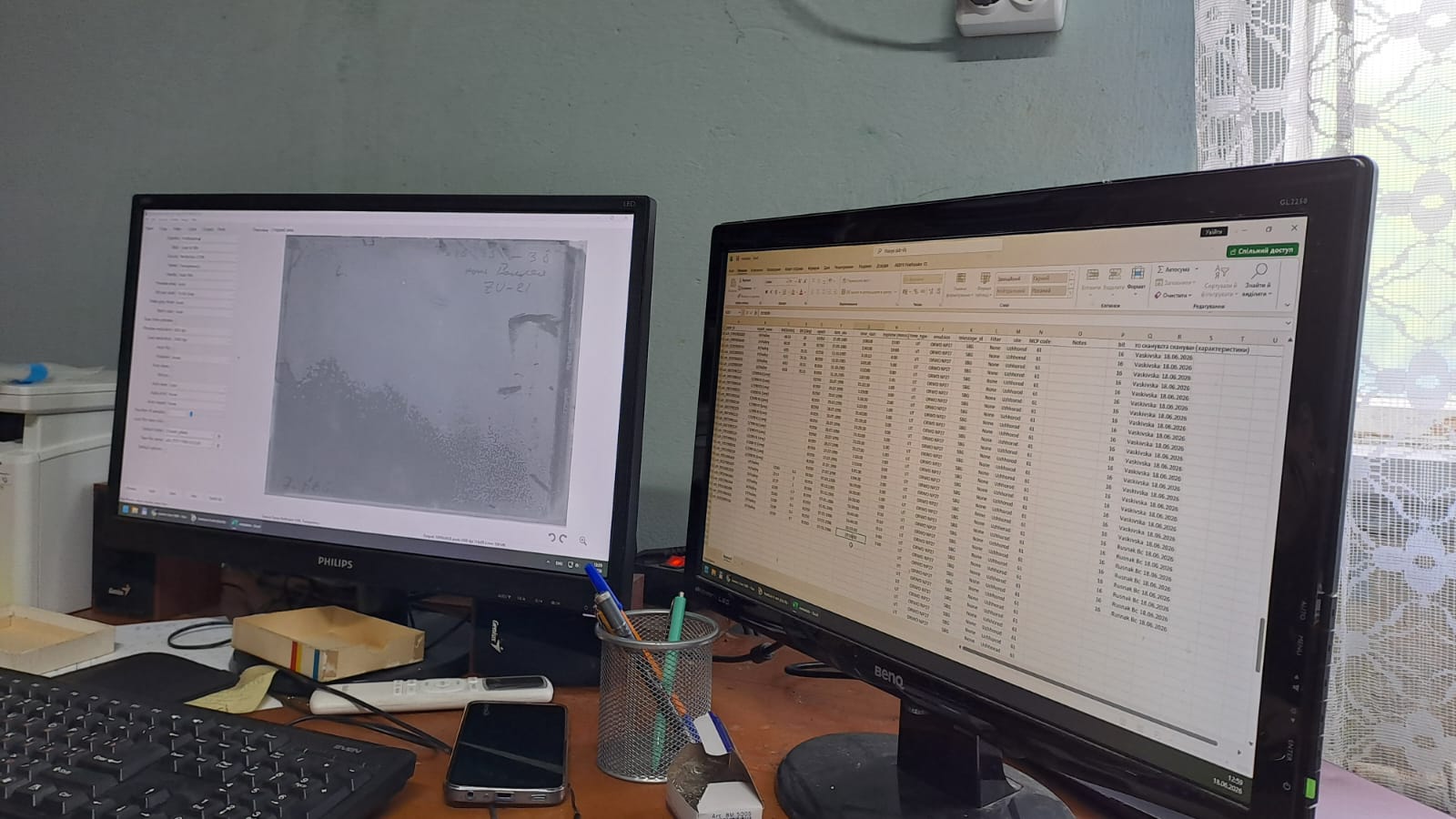
The process launched on 17 June 2026; the scanning was carried out using an Epson Perfection V39II scanner with VueScan 9 (x64) software. The procedure is clear and systematic, and the process requires precision, attention to detail, and cross-checking.
Take the plate out of the box.
Do not wipe the plates! Handle them with care!
Copy the data from the plate into the metadata file.
Place the plate in the scanner and start scanning. Scan one plate at a time, regardless of its size.
Whilst the scan is in progress (30–60 seconds), take out the next plate. Record its details in the metadata file.
Remove the scanned plate from the scanner and carefully put it back in its place.
Do not mix up the plates.
Done!
Thereafter, an Excel file was created containing all the metadata, including: plate_id (plate number), date_obs (observation date); time_start (start time of the plate scan), exptime (exposure time), time_type (time format), emulsion (type of plate emulsion), telescope_id (telescope used for the observation), Filter (filter used during scanning) and others. The metadata is unique and has its own specific characteristics, which vary from archive to archive and from plate to plate. For example, in Uzhhorod, most observations were made using the SBG (Satelliten Beobachtung Gerät) telescope, and the filter is marked as ‘None’.
Afterwards, it is necessary to verify the data, write a report, and upload the scans to an open database so that the scientific community can access them.
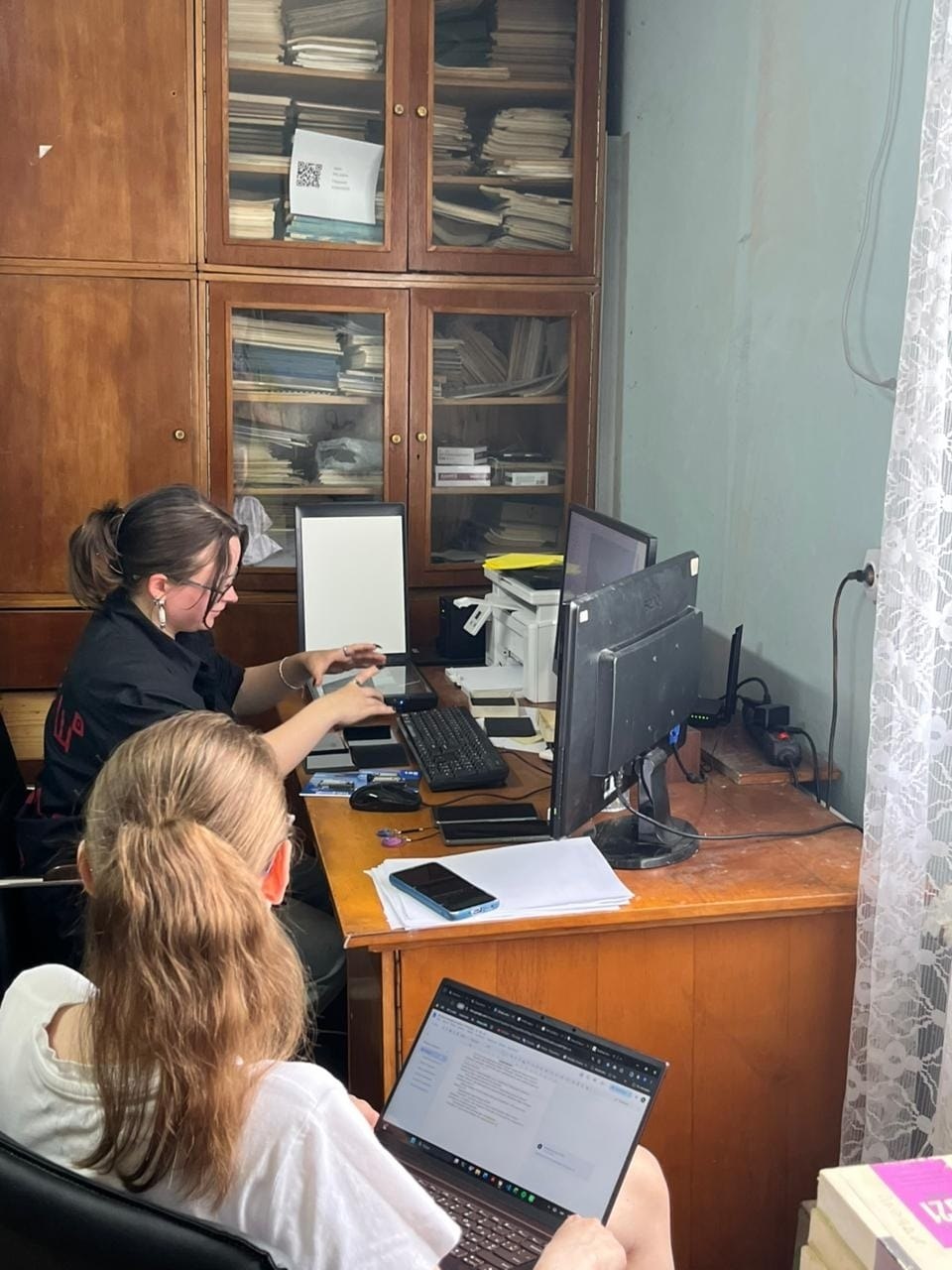
However, there were a few challenges: on the first day, scanning was carried out using Epson software – EpsonSmartScan and EpsonScan 2. Upon discovering that the settings included an auto-exposure function that could not be turned off, the participants switched to different software: scans automatically edited by the programme are unsuitable for academic purposes. Furthermore, if the plates have a very long exposure time (4–5 minutes or more), both the plates themselves and their scans are very dark, making it impossible to see anything. The scanning team tried to correct this by adjusting the brightness settings, but such plates were scanned, marked as ‘overexposed’ and accepted as a given that they would be unusable. Sometimes data on the plates is crossed out or missing: the date, scan time, or coordinates. If there is mould on them, they must be scanned as they are, as attempting to wipe it off could accidentally destroy the emulsion. Such scans and plates are considered unusable. Plates that are cracked or taped up with sticky tape are also scanned: the image can still be analysed, though it would show a crack, which would make it more difficult to work with. As the edges of the glass plates are not polished, you must handle them carefully to avoid cutting yourself. Bear in mind your own safety and the fragility of the plates, which can easily be damaged – dropped, knocked, or shattered – thereby making it impossible to scan the data.
OUTLOOK AND CURRENT STATE OF THE AREA
We are delighted to report that the initiative has been successfully completed: in total, around 300 records have been scanned! Furthermore, the scans will be made available in an open database (a link will be posted on the UzhNU website), and, in collaboration with Viktor Kudak, we will be preparing a research article on the subject.
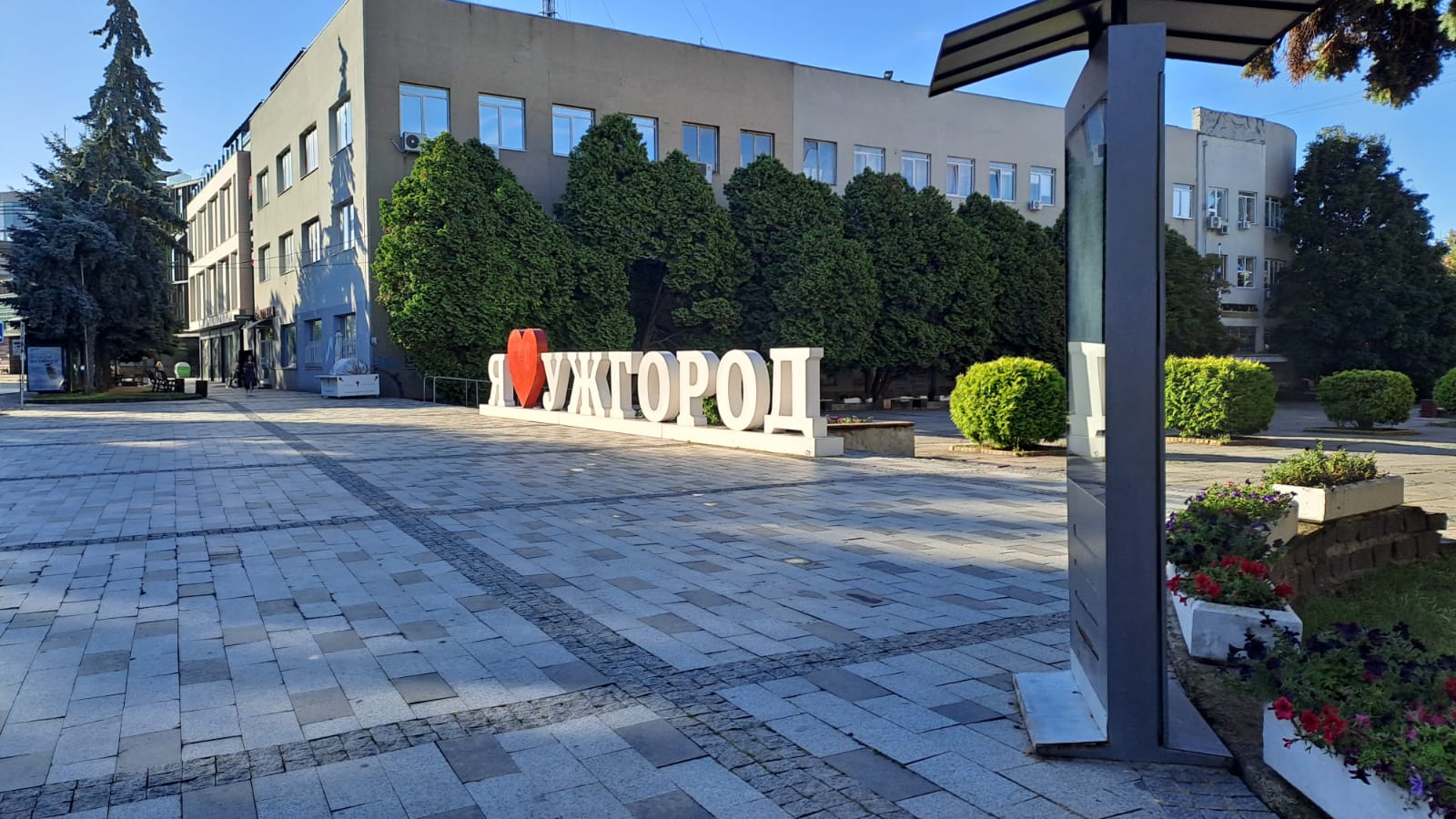
Scanning astronomical archives is currently an activity that requires development, expansion, and, most importantly, people. Our team at the Clear Skies Foundation plans to carry out this mission. We invite you to join us for future scanning projects!
As well as being an important and useful endeavour, it is also very meditative: if you’d like to take a break from the fast pace at which we all live today, soothe your nerves or change your surroundings – this is just the thing.
If you’d like to request an archive to be scanned, please fill in this Google form.